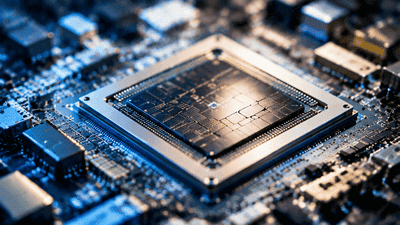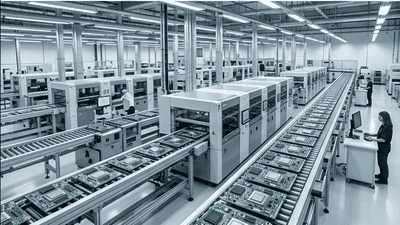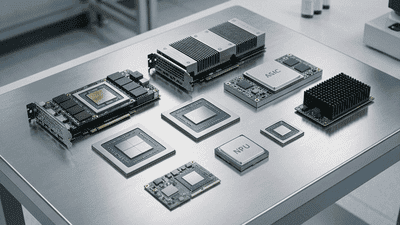
The AI chip market is becoming more diverse, not simply replacing one processor with another. GPUs remain valuable for programmable computing, while large customers increasingly commission custom accelerators that reflect their own workloads, infrastructure, and economics.

Broadcom provides a useful window into that change. In its fiscal third-quarter 2026 announcement, the company reported $16.7 billion in AI semiconductor revenue, up 221% year over year. It attributed the strength to custom AI accelerators and networking, and guided to $21.7 billion in AI semiconductor revenue for the following quarter.
Those figures demonstrate commercial momentum. They do not represent a disclosed custom-chip order book, nor do they measure GPUs displaced.
The defining issue is specialization: customers with sufficient scale are buying more control over how their computing hardware is designed, while retaining other architectures where flexibility remains valuable.
Start by Separating Revenue from Orders
Revenue describes business recognized during a reporting period. An order book describes future customer commitments, subject to the relevant terms.
A capacity plan or revenue forecast is another measure again.
Broadcom’s disclosures provide evidence of shipments, customer programs, and expected growth, but those categories should not be combined into one supposedly certain backlog figure.
For investors, the distinction is essential. Recognized revenue shows execution already achieved. Future commitments provide visibility, but their commercial strength depends on timing, conditions, and customers’ ability to deploy the equipment.
AI Semiconductor Revenue Includes More Than Accelerators
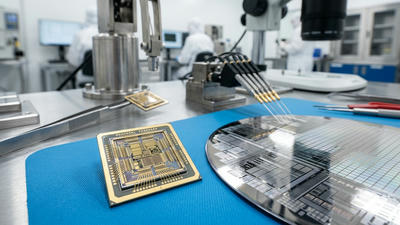
Broadcom’s AI category includes networking alongside custom computing chips.
In its third-quarter earnings discussion, management said custom XPU shipments had increased more than 3.5 times year over year and represented 73% of AI revenue. It separately described AI networking revenue growth exceeding 2.5 times.
That breakdown strengthens the case for custom-accelerator adoption while preserving the distinction between computing and connectivity.
It also prevents a common error: assigning all $16.7 billion to ASIC processors and then using that total as a measure of the custom-chip market.
ASIC and GPU Are Not Opposite Ends of Programmability
ASIC means application-specific integrated circuit. It describes hardware designed around a defined class of functions.
A custom AI ASIC can still execute different models and support programmable operations.
A GPU offers a broader parallel-computing architecture and a substantial software ecosystem, but also contains specialized hardware for important workloads.
The practical distinction is therefore one of emphasis. Custom silicon gives a buyer more influence over architectural choices; a merchant GPU offers an established platform serving many customers and applications.
Why Large Customers Want Their Own Architecture
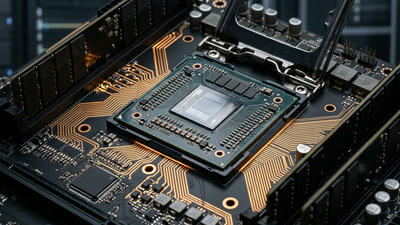
A hyperscaler knows a great deal about the workloads running in its infrastructure.
It can use that knowledge to prioritize the numerical formats, memory behavior, communication patterns, and operating conditions that matter most.
Functions with limited value to those workloads may receive less silicon or development attention.
This can improve the fit between hardware and demand. The advantage is strongest when the customer has enough predictable volume to recover the cost of designing and maintaining the platform.
Broadcom Sells More Than a Finished Chip
Custom accelerator development requires coordination between a customer’s model and system requirements and the semiconductor implementation.
Broadcom participates in that process through design capabilities, interface technology, and manufacturing integration.
The resulting product belongs to a broader customer platform rather than functioning as a general catalog substitute for every GPU.
For investors, that creates a different business model: long development relationships and production ramps can matter more than winning an isolated benchmark contest.
The Customer Base Is Becoming More Important
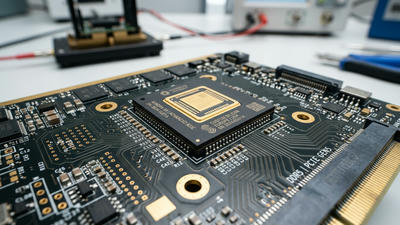
Broadcom’s third-quarter call referred to six XPU customers and described expanding programs across successive generations.
It identified high-volume Ironwood TPU shipments associated with Google and Anthropic, and shipments of OpenAI’s first-generation custom accelerator.
Those are management disclosures about commercial activity, not independent confirmation of every performance claim attached to the products.
The meaningful signal is that custom silicon is moving beyond exploratory projects into named production relationships. The exact scope and economics of each relationship still require separate assessment.
Customer Labels Can Conceal Different Roles
A company commissioning an accelerator, a company purchasing capacity based on that accelerator, and a company operating the infrastructure are not necessarily the same entity.
That distinction matters when reading lists of Broadcom’s AI customers.
An end user’s adoption can increase demand without making that company the original chip-design customer.
For market analysis, relationships should be mapped carefully. Otherwise, several participants in one deployment chain can be mistaken for separate, independently developed accelerator programs.
The Economic Case Starts with Useful Work
A custom chip can eliminate or reduce some costs associated with a broader architecture, but that does not guarantee a cheaper system.
Development, software, verification, manufacturing, memory, and packaging all contribute to the bill.
The buyer must also keep the hardware well utilized.
The relevant comparison is total cost per acceptable result. A lower chip price or stronger efficiency figure provides limited value if the platform needs more engineering support or operates below its intended utilization.
Inference Gives Specialization a Compelling Target
Deployed AI services repeatedly perform inference, turning serving efficiency into an ongoing operating concern.
Known models and service requirements can provide a more stable optimization target than an open-ended research environment.
That can make custom hardware attractive for established workloads.
However, inference is not uniform. Prompt processing, token generation, model size, context length, and concurrency can create different bottlenecks. A successful ASIC needs to address the workload it will actually serve.
Training Still Rewards Flexibility
Research teams change model architectures, operators, and execution strategies.
A broadly programmable platform with mature tools can reduce the friction of those changes.
Custom accelerators can support training too, but their usefulness depends on the software and architectural choices made during development.
The resulting market need not divide neatly into GPUs for training and ASICs for inference. Customers can select different platforms across both activities, according to workload maturity and operating requirements.
Software Is the Real Switching Cost
A new accelerator requires compilers, libraries, runtime support, debugging tools, and integration with the customer’s applications.
Hardware savings can disappear if migration is difficult or performance depends on extensive manual optimization.
For a hyperscaler, controlling the software environment can make that investment more manageable.
For smaller buyers, established GPU support may remain attractive even when custom silicon looks efficient on paper. The best architecture is partly determined by who must perform the adaptation work.
Memory and Packaging Remain Shared Constraints
A custom accelerator may still rely on high-bandwidth memory and advanced packaging.
Design ownership does not remove dependence on qualified memory stacks, substrates, interconnect structures, assembly, or testing.
A supply constraint in those stages can limit output regardless of the processor’s architecture.
For forecasting, custom-chip growth should be connected to the broader manufacturing chain. A customer can approve a design while still waiting for the resources needed to build it at volume.
Networking Expands Broadcom’s Exposure
AI systems need to exchange data between processors and across larger deployments.
As computing infrastructure expands, networking becomes an important part of the performance and cost calculation.
Broadcom’s reported AI networking growth therefore deserves separate attention rather than being treated as an accessory to XPU sales.
For investors, the company can participate in AI spending through more than one route. That is commercially valuable, but each product category has its own competitive position and margin profile.
Power and Facilities Set a Deployment Limit
A computing plan requires electricity, cooling, buildings, and operating staff.
Those resources can take longer to prepare than the chip itself.
A large accelerator commitment does not automatically translate into an equally rapid increase in productive infrastructure.
For buyers, deployment readiness needs to guide procurement. For investors, the schedule between semiconductor shipments and customer use is relevant to assessing whether growth remains sustainable.
Secured Supply Is Not a Guaranteed Revenue Result
Broadcom’s third-quarter commentary described having secured supply sufficient to support approximately $115 billion in AI semiconductor revenue in fiscal 2027.
That is evidence of planning around a substantial expansion, not a promise that every dollar will be recognized.
Customer schedules, manufacturing execution, product mix, and infrastructure readiness still matter.
For financial models, supply support and contracted demand should remain distinct. Neither should be described as a completed revenue outcome before the associated products ship and satisfy recognition requirements.
More ASIC Revenue Does Not Prove GPU Decline
Custom accelerators can grow rapidly while GPU demand also increases.
The overall AI market may expand enough to support both.
Some custom programs may replace GPU purchases, while others serve additional demand that would not otherwise have been deployed in the same way.
The correct interpretation requires evidence about customer allocation and total spending. Broadcom’s growth alone cannot quantify the amount of business lost by any competing supplier.
Revenue Growth and Margin Growth Can Diverge
A shift toward a different product mix can change a company’s reported margin even when revenue expands strongly.
Custom accelerators carry manufacturing costs and commercial arrangements that differ from software or other semiconductor products.
Public analysis of Broadcom’s 2026 outlook identifies higher XPU mix as a potential pressure on gross-margin percentage alongside strong AI growth.
For investors, absolute profit and cash generation matter as well as the percentage margin. A lower blended margin does not automatically mean a weaker business, but it deserves explanation.
Customer Concentration Is the Other Side of Scale
Large custom programs can create substantial production volume and long-term development visibility.
They can also make results sensitive to a small number of customer decisions.
A delayed platform or revised deployment plan may affect both current shipments and the next generation’s schedule.
For Broadcom, the quality of the relationships matters alongside their size. Durable collaboration, successful follow-on designs, and dependable customer economics provide stronger support than one unusually large order.
What to Watch in the Next Reporting Periods
A practical dashboard should separate demand signals from realized execution.
- Distinguish recognized revenue, guidance, commitments, and secured supply.
- Track custom accelerators separately from AI networking.
- Identify customer roles rather than combining every participant into one category.
- Follow production ramps and subsequent design generations.
- Assess manufacturing and infrastructure readiness.
- Compare gross-margin changes with absolute profit and cash generation.
- Monitor concentration and revisions to deployment schedules.
- Avoid translating ASIC growth directly into presumed GPU losses.
These measures reveal whether the shift is creating durable value rather than only impressive headline growth.
The Market Is Becoming a Portfolio of Architectures
Broadcom’s 2026 results show that custom AI silicon has become a substantial commercial business, supported by growing networking demand and named customer programs.
They do not establish the end of GPUs or disclose a universal ASIC order book.
The more useful conclusion is that large buyers are becoming selective. They can use custom accelerators where specialization pays, GPUs where flexibility matters, and a coordinated software and infrastructure layer to make both productive. That is the structural shift Broadcom’s disclosures reveal.